
The GameCube was Nintendo’s first sidestep in the console market. An odd choice for the once-mainstream competitor, Nintendo decided to do its own thing and leave the fighting to Xbox and PlayStation. While staying true to this course of action paid off down the line, it was here that “hardcore” gamers began to drop off from Nintendo in favor of the new kids on the block.
Focusing more on exclusives and gaming, the GameCube lacked a DVD player like the PS2 and wasn’t competing for third-party support the way it could have. Nintendo had chosen a lane and would stick to it to this day.
While there were some superb third-party exclusives like Resident Evil 4, the little purple box that could would focus more on titles that didn’t follow their usual cookie-cutter formula, like Luigi’s Mansion, Mario Kart: Double Dash, and Super Mario Sunshine. The GameCube certainly wanted to make the rules and expectations be damned; it was doing things its own way.
So let’s take a look at this unique console and the best Nintendo GameCube games of all time.
Super Mario Sunshine
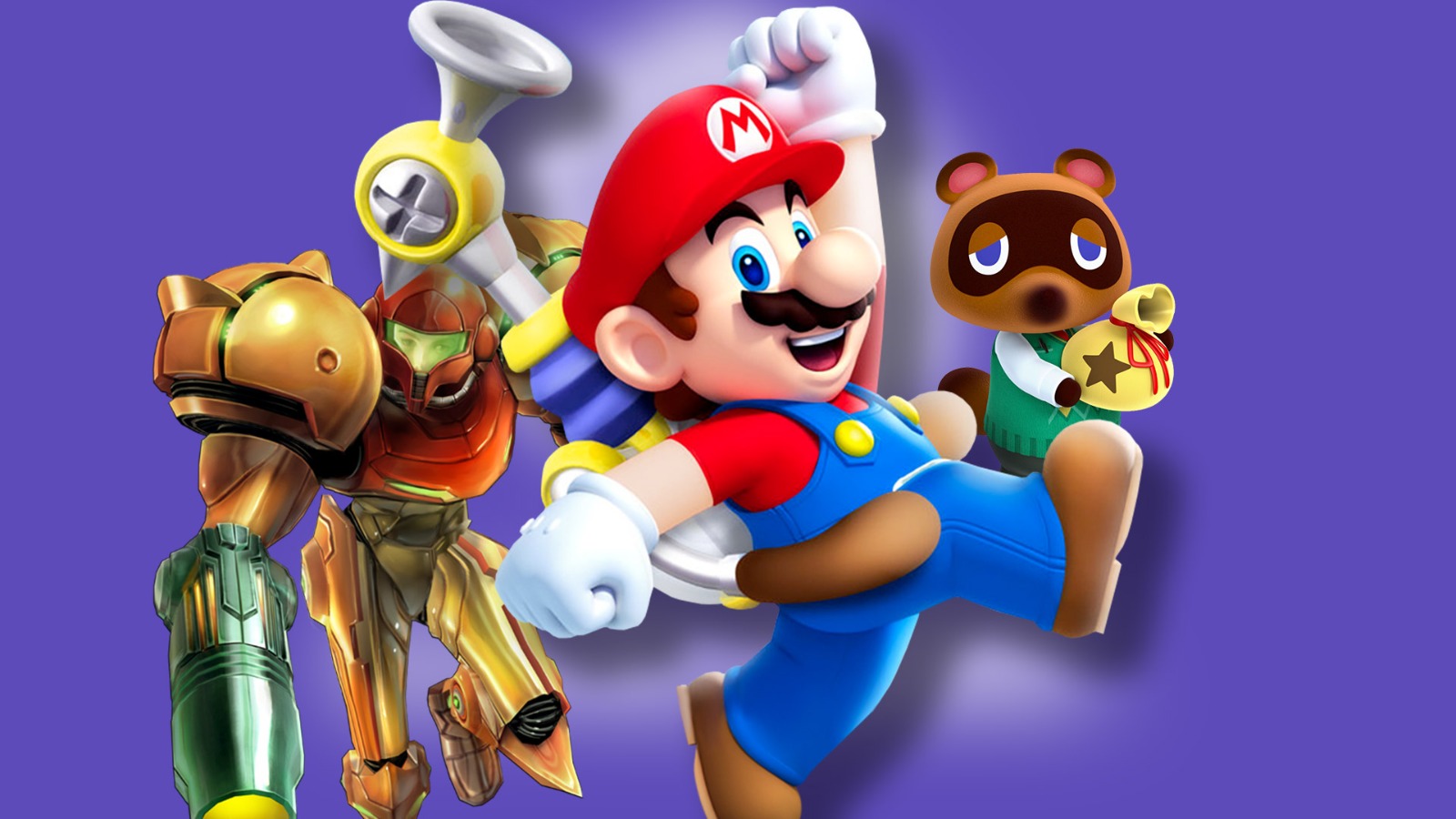
There couldn’t be a Nintendo console without a good old Mario game. In a complete shake-up to the standard platforming formula, Nintendo gave us one of the most divisive Mario games in history with Super Mario Sunshine. Released in 2002, Sunshine has been the topic of debate for Mario fans ever since.

Playing more like a weird prototype version of Splatoon than a Mario game, we see our mustachioed plumber end up on a paradise island on a mission to save the day. With his trusty F.L.U.D.D (Flash Liquidizer Ultra Dousing Device), Mario must clean up the toxic mess and rescue the princess from the evil shadow Mario.
The platforming is mostly solid in this one, but the levels and the newly added water gun gimmick just don’t hold up compared to the almighty Mario 64. For them to take such a huge risk on the second-ever 3D Mario title was, and still is, a crazy move. Criticize Nintendo all you like for this one, but to shake it up so much is a ballsy move, almost unheard of in game development these days.
The Legend of Zelda: Twilight Princess
If the GameCube is Nintendo’s rebellious teen phase, then The Legend of Zelda: Twilight Princess is definitely Link’s emo era. The darkest Zelda title we have ever seen, Link comes packing a full-blown love-it-or-hate-it wolf transformation.

This was the closest we got to a “realistic” Zelda game before cell-shading and the Breath of the Wild style. We got this game close to the twilight of the console, and as such, it was a cross-generation title released on the Wii as well.
Another divisive GameCube title (as most GC games are), Twilight Princess is now seen in a more favorable light than at launch. If you have the GameCube version, you know the value shot up quite a bit thanks to more fans jumping ship to the new, shiny Wii and buying that version instead.
Luigi’s Mansion
The one that planted the flag for odd choices this generation: Luigi’s Mansion. Starring Mario’s more timid, green overalls-sporting brother, this game has you playing as Luigi, who thinks he has won a mansion in a contest. Upon arrival, you find there are shenanigans afoot and have to bust some ghosts in order to save the day and find…Mario?

As a launch title for a new Nintendo console, choosing to have Luigi headline the main game to sell the system was yet again very ballsy. While Luigi has starred in titles before this one, like Mario Is Missing!, launching a system with the more famous brother taking a back seat was a gamble.
Luckily, the game turns out to be a lot of fun and has spawned 2 equally delightful sequels. Luigi’s Mansion is a perfect game for younger (or older) kids who want something spooky but don’t want to be terrified or have sleepless nights afterward.
Metroid Prime
You can’t have a GameCube list without mentioning one of the greatest reinventions of a franchise ever. Samus was already making waves as a 2D adventure series so good and unique that it was co-founder of its own genre.

Taking this winning formula and dragging it into 3D was a massive risk, but one that paid off tenfold. I can’t think of another game that made the move as successfully as this one. Somehow dropping the gameplay into a first-person perspective just worked, arguably even better than it did in the originals.
Often mistaken for a shooter, the unique blend of exploration puzzles and combat soon proves that Metroid Prime is a whole different beast. Arguably the best in the entire franchise, despite having 3 numbered sequels and spin-offs, Samus’ debut is an all-time great game that should be played wherever you can access it. However, the GameCube was its birthplace, and a must-play for anyone exploring the catalog.
Super Smash Bros. Melee
If Sunshine was the experiment, Melee was the cultural explosion. Taking the modest foundation laid on the N64 and injecting it with a gallon of digital caffeine, Nintendo created a fighter that was never supposed to be this technical. It was meant to be a party game—a way to settle playground disputes by seeing if Pikachu could out-bash Bowser, but the community had other ideas.

The speed of Melee is legendary. Even decades later, it remains a staple of the competitive fighting scene, with “pro” players clinging to their wired GameCube controllers like holy relics. It’s the quintessential “easy to learn, impossible to master” title.
Whether you’re a casual fan just looking to hit a Home-Run Bat or a tournament grinder frame-canceling every move, Melee is the definitive reason why the GameCube’s local multiplayer was king.
Eternal Darkness: Sanity’s Requiem
Remember how I said Nintendo was in its rebellious phase? This is the “staying out past curfew and listening to heavy metal” phase. Published by Nintendo but developed by Silicon Knights, Eternal Darkness is a psychological horror masterpiece that famously messes with the player as much as it does with the characters.

As your “Sanity Meter” drops, the game begins to gaslight you. It mutes your TV, simulates a “Blue Screen of Death,” and even pretends to delete your save files.
In an era where Nintendo was often labeled “kiddy” by the Xbox crowd, Eternal Darkness was a visceral, Lovecraftian middle finger to that narrative. It’s dark, it’s mature, and it’s one of the most creative uses of the medium we’ve ever seen.
Mario Kart: Double Dash!!
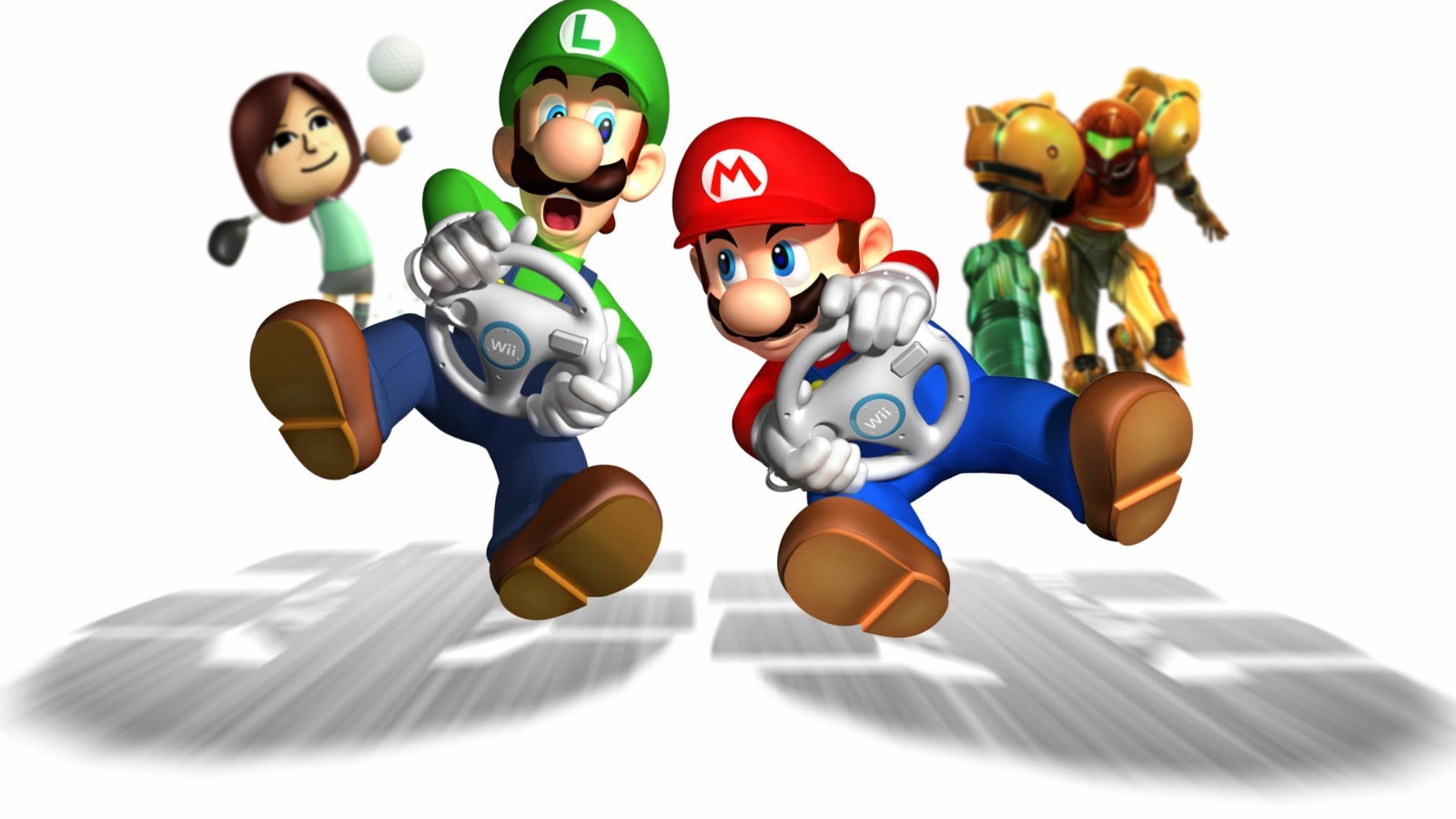
In keeping with the theme of “if it ain’t broke, let’s break it anyway,” Nintendo decided that one plumber per kart simply wasn’t enough. Double Dash introduced a co-op mechanic that allowed two players to man a single vehicle—one driving, the other hurling shells and sabotaging friendships.

It is arguably the most chaotic entry in the series. With character-specific special items and a physics engine that felt a little more “slidey” than its predecessors, it stands out as a unique pivot for the franchise.
While later entries reverted to the single-driver format, Double Dash remains the gold standard for those who want their racing games with a side of coordinated teamwork (or loud shouting matches).
Paper Mario: The Thousand-Year Door
While the N64 original was a charming curiosity, The Thousand-Year Door is widely considered the peak of the Paper Mario lineage. It took the flat, aesthetic world and gave it a surprisingly deep, witty, and sometimes dark narrative. From a literal wrestling circuit to a spooky ghost train, the variety in this game is staggering.

The turn-based combat, centered around an interactive stage audience, added a layer of strategy that felt fresh and rewarding. It’s a masterclass in RPG design, proving that you don’t need 4K textures and grit to tell a compelling, massive story. If you haven’t played the recent remake, do yourself a favor and track down the original purple disc; it’s a piece of Nintendo history that still holds up perfectly.
Pikmin
Only Nintendo would look at a garden and see a real-time strategy epic. Pikmin was the brainchild of Shigeru Miyamoto, supposedly inspired by watching ants in his backyard. You play as Captain Olimar, a tiny space traveler stranded on a “hostile” planet (Earth), who must command legions of colorful plant-critters to rebuild his ship.

It’s a game about efficiency, multitasking, and—let’s be honest—the trauma of watching your adorable followers get eaten by a Bulborb.
The 30-day time limit added a sense of urgency that was rare for Nintendo, making every sunset feel like a high-stakes deadline. It’s weird, it’s cute, and it’s uniquely Nintendo.
Animal Crossing
Before it was a global phenomenon that helped us survive 2020, Animal Crossing was a quirky N64 port that barely made it to Western shores on the GameCube. It’s the ultimate “vibe” game. There is no boss to fight, no world to save; you just move into a town, pay off your mortgage to a capitalist tanuki, and go fishing.

What made it revolutionary was the internal clock. The game lived even when you weren’t playing. If you missed a holiday in real life, you missed it in the game.
It turned the GameCube into a window to a second, slower world. It was the antithesis of the “hardcore” shooters of the time, proving that sometimes, gamers just want to pull weeds and talk to a depressed dog playing guitar.
Looking back, the GameCube was never about winning the numbers game or conquering the living room with a multimedia hub. It was Nintendo’s experimental laboratory, an era where the company wasn’t afraid to get weird, take risks, and occasionally alienate its own fanbase in the pursuit of something fresh.
While it may have sat in third place during its lifespan, the “little purple box” has aged like a fine wine, boasting a library that prioritizes personality over polygons. Whether you were cleaning up goop in Isle Delfino or losing your mind in a haunted mansion, the GameCube proved that even if you aren’t the biggest kid on the playground, you can certainly be the most interesting. It remains a testament to a time when Nintendo stopped following the rules and started making its own.
READ MORE: Best Nintendo Wii Games Of All Time


One response to “Best Nintendo GameCube Games Of All Time”
[…] READ MORE: Best Nintendo GameCube Games Of All Time […]